Monday, November 21, 2022

Happy Thanksgiving! Missy Wolfe, Overlook Farm and Eastover, Factories in Greenwich & Samuel Ferris House


This podcast is made possible by Site Design Associates; the Long Island Sound Institute (LISI), the Ambassador Museum United States of America, Kevin M. J. O'Connor of Jeffrey Matthews Wealth Management, and listeners like you everywhere on the Atlantic Learning Consortium Network!


On today’s 25th of November 2022 show, you’ll be treated to an encore conversation from several years ago with Historian Missy Wolfe on Talk of the Town. 


Wolfe is the author of Hidden History of Colonial Greenwich, and Insubordinate Spirit: A True Story of Life and Loss in Earliest America. 


Thanks to Greenwich Library and the Horseneck Chapter of the Daughters of the American Revolution, she’s appearing on the 5th of December to discuss her new two-volume set The Great Ledger: Records of the Town of Greenwich. 


On last week’s 18th of November show, you heard a sampling of how Thanksgiving was celebrated in Greenwich, Connecticut’s history. I’ll have a few more today. 


We’ll cast our gaze to the era known locally as the ‘Great Estates’ by visiting Overlook Farm -today’s Convent of the Sacred Heart School campus- and Eastover overlooking the glistening waters of Long Island Sound, with both estates constructed for Henry Steers. 


Wilcox Mill on the Byram River, Riversville

Did you know that Greenwich’s landscape was at one time dotted with manufacturing centers, especially along its rivers? Some of those buildings are still with us today. A century ago, columnist Erwin Edwards imparted facts about that history with his readers. I’ll share that with you.


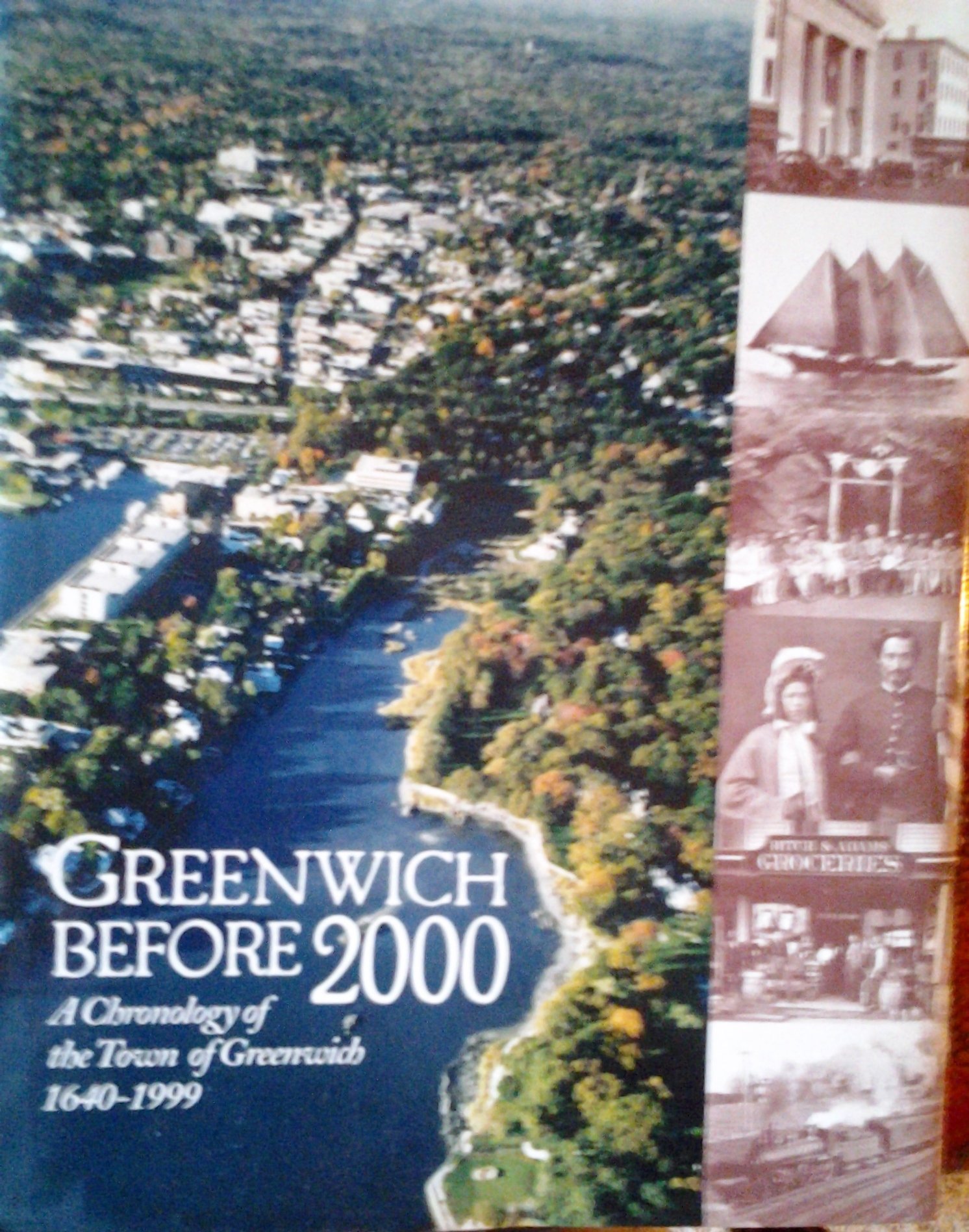
On Greenwich Before 2000, we’ll journey back to the years 1758 through 1765. 


There’s good news about the preservation of two Greenwich historical landmarks: the Samuel Ferris House built circa 1760 in Riverside; and the Isaac Mead House built 1799 off Field Point Road, mostly known in recent years as the Homestead Inn. 


There’s holiday magic in the air at the Greenwich Historical Society! You’ll hear news of exhibits, public activities and events that I encourage you to attend. (Click here for Greenwich Free Press)


You’ve come to the right place to learn about the history of the Town of Greenwich, Connecticut, one of America's most interesting and extraordinary communities.  


We’ll have all this -and more- as history continues to unfold. 


Contact: greenwichatownforallseasons@gmail.com 


Thursday, November 17, 2022

Ridgecrest, 1942, Potter's Field, Thanksgiving in Greenwich, Seton's Exploration of the 'Far North' and More!


This podcast is made possible by Site Design Associates; the Long Island Sound Institute (LISI), the Ambassador Museum United States of America, Kevin M. J. O'Connor of Jeffrey Matthews Wealth Management, and listeners like you everywhere on the Atlantic Learning Consortium Network!

Happy Autumn! 


It is the last smile of nature before the winter cold. 


May the warmth and glow of the autumn season bring you endless joy! 


And as we approach Thanksgiving next week, remember to see the beauty of autumn, let us see the blessings which are ours. 


On today’s 18th of November 2022 show, we’ll cast our gaze back to America’s Gilded Age in the 1890’s through Matt Bernard’s book, Victorian Summer: The Historic Houses of Belle Haven Park, Greenwich, Connecticut. 


Ridgecrest is a shingle-style residence in what Scientific American described as being in the “modern rustic style.” 


It was built in 1892 on Bush Avenue for Nelson Mead, a Greenwich-born lawyer and businessman who, in 1912, was until recently the last Democrat from Greenwich to serve in the Connecticut State House. 


On Greenwich Before 2000, we’ll go back to what happened in the year 1942. 


A potter’s field, paupers’ cemetery or common grave is a place for the burial of the unknown, unclaimed or indigent people. It might surprise you to learn that the Town of Greenwich has such a cemetery. I’ll share its history. 


You’ll meet Greenwich artist and historical columnist Whitman Bailey, whose illustrations and stories about the town’s history and historically notable places were published in Greenwich newspapers. You’ll learn about a section of Bruce Park once known as Hawk’s Nest. 


The Greenwich News reported on its front page Ernest Thompson Seton’s seven months of exploration in the “Far North” after the famous naturalist returned to his Cos Cob estate, Wyndygoul on November 15, 1907. 


In November, 1928, columnist L.B. Edwards penned a piece in the Greenwich News and Graphic on how Thanksgiving was observed in Greenwich, Connecticut throughout its history. 


In early November, 1911,  John Skimmerhorn, a seventeen-year-old farmer’s boy from Webster, New York near Rochester, wandered into Greenwich police headquarters. 


His father and mother were in Danielson, a borough in Killingly, Windham County, Connecticut on a farm he purchased. Leaving the boy to husk corn on the old farm, his instructions were to take the train to join them. How did he end up in Greenwich? Stay tuned. 


“An armed and disguised company entered Mr. George Dayton’s home, and celebrate the 20th anniversary of his wedding” in Belle Haven. This was a novel way to celebrate, and I'll have details. 


Thanksgiving is less than a week away! I’ve have news of the Winter Market Cocktail Reception at Christ Church Greenwich benefitting the Greenwich Historical Society. 


Twachtman’s Greenwich Home, Then and Now is an illuminating article penned by Maggie Dimock, Curator of Exhibitions and Collections with the Greenwich Historical Society. Her piece is associated with the recently-opened Life and Art: The Greenwich Paintings of John Henry Twachtman, one that I strongly recommend.


You'll hear news of exhibits, activities and events for the public.


You’ve come to the right place to learn about the history of the Town of Greenwich, Connecticut, one of America's most interesting and extraordinary communities.  


We’ll have all this -and more- as history continues to unfold. 


Friday, November 11, 2022

Veterans Day, Dunellen Hall, 1941, Donkey Attacks Cos Cob Trolley, Twachtman Exhibit, John Clapp House & More!


This podcast is made possible by Site Design Associates; the Long Island Sound Institute (LISI), the Ambassador Museum United States of America, Kevin M. J. O'Connor of Jeffrey Matthews Wealth Management, and listeners like you everywhere on the Atlantic Learning Consortium Network!


On today’s Veteran’s Day 2022 show, I’ll share with you today’s public events in Greenwich, as well as take you back in time to what was then Armistice Day a century ago in 1922.


“Hooray, the elections are over!” My congratulations go to all candidates. It’s not easy putting yourself out there for elected office. I’ll take you back to 1922 with some post-election thoughts from that year.


The late Town Historian William E. Finch, Jr., referred to the Gilded Age/Great Estates era in the town as “the flowering of Greenwich,” when the word ‘Greenwich’ was synonymous with the word ‘millionaire.’ 


Thanks to the Junior League of Greenwich for publishing the book The Great Estates Greenwich, Connecticut 1880-1930, our travel back in time will take us to what is perhaps the most famous of those estates, Dunellen Hall in Round Hill. 


On Greenwich Before 2000, we’ll go back to what happened in the year 1941. 


John Doran, the six-year-old son of John Doran of Railroad Avenue, attracted a great deal of attention in 1907 as Greenwich’s “youngest policeman.” This is a story from our history that, I hope, brings a smile. 


On Crime and Misdemeanors, a century ago Mamie Wilson assaulted John A. Taylor with a broomstick, while New York State resident Peter Bazzella was hauled into court for having dealer’s license plates on a car while driving with eight friends on the same day as the Yale-West Point football game. What happened to them? 


In November , 1907, a donkey in Cos Cob, “Don Quixote, the joy of John Boles, Jr.’s children’s hearts, met with a tragic fate Tuesday in front of a trolley car at Cos Cob…” The headline of Greenwich News read, ‘A Donkey’s Fate. John Boles’ Mule Attacks Car for Revenge.’ As you can imagine, it was all unique and complicated -and I’ll explain why. 


Twachtman’s Greenwich Home, Then and Now is an illuminating article penned by Maggie Dimock, Curator of Exhibitions and Collections with the Greenwich Historical Society. Her piece is associated with the recently-opened Life and Art: The Greenwich Paintings of John Henry Twachtman, one that I strongly recommend. I’ll also share with you news of a “plein air” event scheduled for tomorrow, Saturday, November 12. 


I’m announcing that a group of associates and I have expressed interest in acquiring the John Clapp House on King Street in Greenwich’s backcountry.  Built in 1772, it is a designated landmark by the Greenwich Historical Society. 


The property constitutes 3.2 acres with the house and a barn. We are interested in establishing a learning center for all that focuses on agriscience, a place where events can be held and more. 


Interested in joining us? Contact me at by email at GreenwichATownForAllSeasons@gmail.com. 


I'll have more about Discover Greenwich Creating a Sense of Place, celebrating the 90th year anniversary of the Greenwich Historical Society. 


If you’ve not done so yet, I invite you to Greenwich Historical Society’ current exhibition, Life and Art: The Greenwich Paintings of John Henry Twachtman. It’s been eagerly anticipated and well worth it. 


You'll hear news of exhibits, activities and events for the public.


You’ve come to the right place to learn about the history of the Town of Greenwich, Connecticut, one of America's most interesting and extraordinary communities.  


We’ll have all this -and more- as history continues to unfold. 


Tuesday, November 8, 2022

Elections & Methods of Voting, Belle Haven's Kent Cottage, 1939 and Tomac Cemetery


This podcast is made possible by Site Design Associates; the Long Island Sound Institute (LISI), the Ambassador Museum United States of America, Kevin M. J. O'Connor of Jeffrey Matthews Wealth Management, and listeners like you everywhere on the Atlantic Learning Consortium Network!


On today’s Friday, November 4, 2022 show, you are reminded that Election Day is here! 


Be sure to go out and exercise your precious right to vote on Tuesday, November 8. 


Speaking of elections, I’ll share an amusing poem (see above) that was published in the Greenwich News & Graphic a century ago. 


Also, Judge Frederick August Hubbard, also known as Ezekiel Lemondale, wrote in 1930 about then-modern methods of voting as compared to previous ones, about the secret ballot of 1864, a novel voting machine that resembled a coffin set on end, and the unfair handling of voters. 


At the height of America’s Gilded Age, some of America’s wealthy families came Belle Haven here in Greenwich. It was celebrated as one of the first and most spectacular residence parks in the nation. Thanks to Matt Bernard’s incredible compilation of Belle Haven’s rich history, Victorian Summer: The Historic Houses of Belle Haven Park, Greenwich, Connecticut, you’ll hear about Kent Cottage, principally owned by Jennie Kent, and constructed in 1889. 


On Greenwich Before 2000, we’ll go back to the year 1939. 


We have over 63 cemeteries and burying grounds dotting the town’s landscape. I’ll share some history about the oldest existing one, Tomac Cemetery in Old Greenwich.


I'll have more about Discover Greenwich Creating a Sense of Place, celebrating the 90th year anniversary of the Greenwich Historical Society. 


You'll hear news of exhibits, activities and events for the public.


You’ve come to the right place to learn about the history of the Town of Greenwich, Connecticut, one of America's most interesting and extraordinary communities.  


We’ll have all this -and more- as history continues to unfold.