Monday, December 5, 2022

HDC Chair Stephen Bishop, Conyers Manor, Cedar Cliff, 1778, William G. Rockefeller Dies, Standard Oil & Greenwich


Conyers Manor, Greenwich, Connecticut. 


This podcast is made possible by Site Design Associates; the Long Island Sound Institute (LISI), the Ambassador Museum United States of America, Kevin M. J. O'Connor of Jeffrey Matthews Wealth Management, and listeners like you everywhere on the Atlantic Learning Consortium Network!


“By the age of fifty-two years, Edmund C. Converse had a notable impact on American business,” according to The Great Estates: Greenwich, Connecticut 1880-1930, published in 1986 by the Junior League of Greenwich. Borrow a copy via the Greenwich Library. 


On today’s 6th of December, 2022 show you’ll learn about his estate, Conyers Manor. “Not only did Conyers Manor overshadow the other grandly conceived homes in Greenwich, it was also one of the most profitable estates in the Northeast.” 


On Talk of the Town, we’ll share an encore conversation from 2018 with Stephen Bishop, chair of the Greenwich Historic District Commission


The commission has been in the news recently with preservation activities underway regarding the Samuel Ferris House (1760) in Riverside, and the Havemeyer Building on Greenwich Avenue


On The Judge’s Corner, Judge Frederick A. Hubbard wrote about Cedar Cliff, the home of actor Edwin Booth, which in turn became the site of the Cos Cob Power Plant and, today, Cos Cob Park. 


It was one-hundred years ago when Greenwich and New York City resident William G. Rockefeller died on December 1, 1922. I'll share details. 


In a related bit of history, Erwin Edwards penned a piece for his column Greenwich Life As It Is -And Was regarding Greenwich, Connecticut and the relationship with the Standard Oil Company.


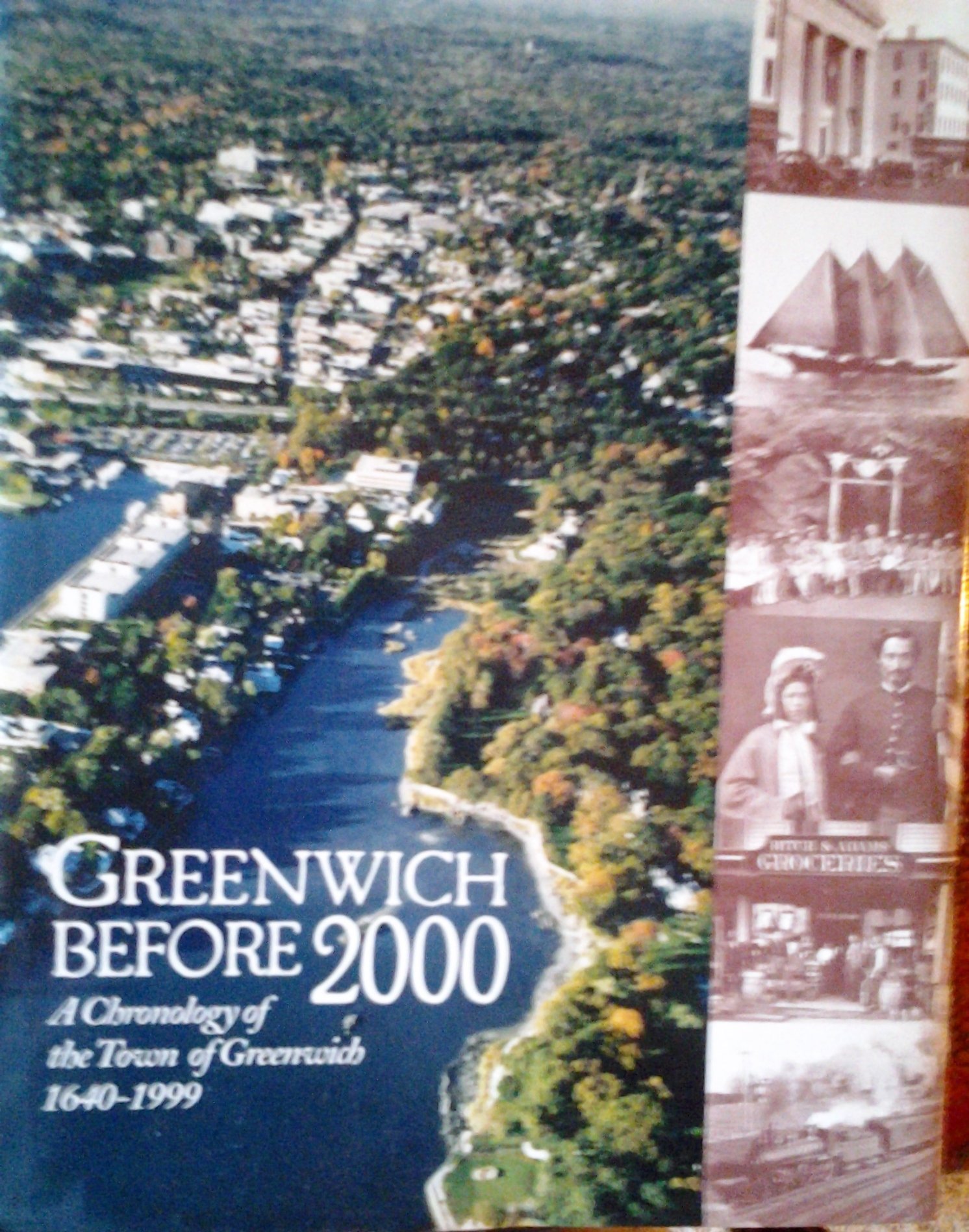
We'll go back in history to the year 1778 as found in Greenwich Before 2000: A Chronology of the Town of Greenwich 1640-1999.


Tis the season! There's lots for you to see, do and enjoy as the December holidays fast approach. 


The discerning shopper’s destination for unique accessories and gifts, the Greenwich Historical Society's Museum Store is a local gem.  The store offers convenient online shopping and pick-up, ample parking and complimentary gift wrapping. Ask about discounts. 

Browse the latest arrivals, and relax at the Artists CafĂ© during your next visit, too. 

The Museum Store is open Monday – Friday 9am – 5pm, Weekends 12pm – 4pm.

You’ve come to the right place to learn about the history of the Town of Greenwich, Connecticut, one of America's most interesting and extraordinary communities.  


We’ll have all this -and more- as history continues to unfold. 


I'm Jeffrey Bingham Mead, your host. Thank you for listening to the weekly podcast, now released on Tuesdays. 

Contact me and join our growing number of listeners anytime via email at greenwichatownforallseasons@gmail.com

Show podcast episodes are posted weekly on various social media platforms. Click this link to the show's Facebook site. 

I also encourage you to like and visit the group You Know You're From Greenwich Ct If, where links to the show are posted weekly, too. 

Tuesday, November 29, 2022

Greenwich's Pillared House, Belle Haven's Russell Cottage, Samuel Ferris House, 1800-1808, Havemeyer Building & Crimes!

"And it remains a dignified example of early Greenwich mansions."
'The Columns,' 183 East Putnam Avenue, Greenwich.


This podcast is made possible by Site Design Associates; the Long Island Sound Institute (LISI), the Ambassador Museum United States of America, Kevin M. J. O'Connor of Jeffrey Matthews Wealth Management, and listeners like you everywhere on the Atlantic Learning Consortium Network!


In November, 1929, Frederick A. Hubbard wrote in his column 'The Judge's Corner' about the "History of Only Pillared House in Greenwich- Probably Built Before 1848..." It was moved to its present location after 1877, when William G. Rockefeller moved it. You'll learn about the history of this house (pictured above) and its owner occupants.


Victorian Summer: The Historic Houses of Belle Haven Park, Greenwich, Connecticut by Matt Bernard is an incredible compilation of Belle Haven’s rich history. 


Featuring beautiful photos and ephemera, the book is the culmination of decades of work and research, taking its readers to America’s Gilded Age. 


On today’s show, we’ll visit Russell Cottage -also known as Bessonette- once located at 186 Otter Rock Drive. Its principal owners were Elwood W. Russell and William H. Hays. It was built in 1898, designed by architect Charles P.H. Gilbert, and demolished in 1952.


We'll go back in history to the years 1800-1808 as found in Before 2000: A Chronology of the Town of Greenwich 1640-1999.


We first reported last week about measures underway to grant  to the Samuel Ferris House in Riverside the highest level of historic preservation status and protection. We'll share an update with you.


Thanks to Greenwich Free Press, a special committee has been appointed by the town government to evaluate options for future uses of the Havemeyer Building on Greenwich Avenue, presently the headquarters of the Greenwich Board of Education. (Visit this link to the Greenwich Historical Society)  


From publisher Leslie Yager: 


Originally, the building was a gift to the central Greenwich Meeting House School district in 1892 by Henry Osborne and Louisine Havemeyer. The building was completed in 1894. 


Henry O Havemeyer finished his formal education at the age of 8. He became an apprentice in the family’s sugar refinery in Brooklyn at the age of 15, and worked his way up the ladder to become the principal partner in the firm by 1876. Havemeyer, the “Sugar King,” became president of the American Sugar Refining Company in 1891. 


His wife, Louisine, in addition to being a patron of impressionist art, was one of the more prominent contributors to the suffrage movement in the US. 


The Havemeyers held a design contest and selected architects Loring & Phipps, who went on to build a remarkably similar building, Miner Hall at Tufts University in Massachusetts, in the same year. 
Both buildings evoke a sense of permanence that has been described as “anchored to the earth.”


Ninety-nine years ago, on November 30, 1923, there was a great deal of crime news -most of it focused on Prohibition. You'll hear about that on Crimes and Misdemeanors. 


Tis the season! There's lots for you to see, do and enjoy as the December holidays fast approach. 


The discerning shopper’s destination for unique accessories and gifts, the Greenwich Historical Society's Museum Store is a local gem.  We offer convenient online shopping and pick-up, ample parking and complimentary gift wrapping. 

Browse the latest arrivals and relax at the Artists Café during your next visit!

The Museum Store is open Monday – Friday 9am – 5pm, Weekends 12pm – 4pm.


You’ve come to the right place to learn about the history of the Town of Greenwich, Connecticut, one of America's most interesting and extraordinary communities.  


We’ll have all this -and more- as history continues to unfold. 


Jeffrey Bingham Mead, Host.


I'm Jeffrey Bingham Mead, your host. Thank you for listening to the weekly podcast, now released on Tuesdays. 

Contact me and join our growing number of listeners anytime via email at greenwichatownforallseasons@gmail.com. 

Show podcast episodes are posted weekly on various social media platforms. Click this link to the show's Facebook site. I also encourage you liking the group You Know You're From Greenwich Ct If, where links to the show are posted. 


Monday, November 21, 2022

Happy Thanksgiving! Missy Wolfe, Overlook Farm and Eastover, Factories in Greenwich & Samuel Ferris House


This podcast is made possible by Site Design Associates; the Long Island Sound Institute (LISI), the Ambassador Museum United States of America, Kevin M. J. O'Connor of Jeffrey Matthews Wealth Management, and listeners like you everywhere on the Atlantic Learning Consortium Network!


On today’s 25th of November 2022 show, you’ll be treated to an encore conversation from several years ago with Historian Missy Wolfe on Talk of the Town


Wolfe is the author of Hidden History of Colonial Greenwich, and Insubordinate Spirit: A True Story of Life and Loss in Earliest America


Thanks to Greenwich Library and the Horseneck Chapter of the Daughters of the American Revolution, she’s appearing on the 5th of December to discuss her new two-volume set The Great Ledger: Records of the Town of Greenwich


On last week’s 18th of November show, you heard a sampling of how Thanksgiving was celebrated in Greenwich, Connecticut’s history. I’ll have a few more today. 


We’ll cast our gaze to the era known locally as the ‘Great Estates’ by visiting Overlook Farm -today’s Convent of the Sacred Heart School campus- and Eastover overlooking the glistening waters of Long Island Sound, with both estates constructed for Henry Steers. 


Wilcox Mill on the Byram River, Riversville

Did you know that Greenwich’s landscape was at one time dotted with manufacturing centers, especially along its rivers? Some of those buildings are still with us today. A century ago, columnist Erwin Edwards imparted facts about that history with his readers. I’ll share that with you.


On Greenwich Before 2000, we’ll journey back to the years 1758 through 1765. 


There’s good news about the preservation of two Greenwich historical landmarks: the Samuel Ferris House built circa 1760 in Riverside; and the Isaac Mead House built 1799 off Field Point Road, mostly known in recent years as the Homestead Inn. 


There’s holiday magic in the air at the Greenwich Historical Society! You’ll hear news of exhibits, public activities and events that I encourage you to attend. (Click here for Greenwich Free Press)


You’ve come to the right place to learn about the history of the Town of Greenwich, Connecticut, one of America's most interesting and extraordinary communities.  


We’ll have all this -and more- as history continues to unfold. 


Contact: greenwichatownforallseasons@gmail.com 


Thursday, November 17, 2022

Ridgecrest, 1942, Potter's Field, Thanksgiving in Greenwich, Seton's Exploration of the 'Far North' and More!


This podcast is made possible by Site Design Associates; the Long Island Sound Institute (LISI), the Ambassador Museum United States of America, Kevin M. J. O'Connor of Jeffrey Matthews Wealth Management, and listeners like you everywhere on the Atlantic Learning Consortium Network!

Happy Autumn! 


It is the last smile of nature before the winter cold. 


May the warmth and glow of the autumn season bring you endless joy! 


And as we approach Thanksgiving next week, remember to see the beauty of autumn, let us see the blessings which are ours. 


On today’s 18th of November 2022 show, we’ll cast our gaze back to America’s Gilded Age in the 1890’s through Matt Bernard’s book, Victorian Summer: The Historic Houses of Belle Haven Park, Greenwich, Connecticut. 


Ridgecrest is a shingle-style residence in what Scientific American described as being in the “modern rustic style.” 


It was built in 1892 on Bush Avenue for Nelson Mead, a Greenwich-born lawyer and businessman who, in 1912, was until recently the last Democrat from Greenwich to serve in the Connecticut State House. 


On Greenwich Before 2000, we’ll go back to what happened in the year 1942. 


A potter’s field, paupers’ cemetery or common grave is a place for the burial of the unknown, unclaimed or indigent people. It might surprise you to learn that the Town of Greenwich has such a cemetery. I’ll share its history. 


You’ll meet Greenwich artist and historical columnist Whitman Bailey, whose illustrations and stories about the town’s history and historically notable places were published in Greenwich newspapers. You’ll learn about a section of Bruce Park once known as Hawk’s Nest. 


The Greenwich News reported on its front page Ernest Thompson Seton’s seven months of exploration in the “Far North” after the famous naturalist returned to his Cos Cob estate, Wyndygoul on November 15, 1907. 


In November, 1928, columnist L.B. Edwards penned a piece in the Greenwich News and Graphic on how Thanksgiving was observed in Greenwich, Connecticut throughout its history. 


In early November, 1911,  John Skimmerhorn, a seventeen-year-old farmer’s boy from Webster, New York near Rochester, wandered into Greenwich police headquarters. 


His father and mother were in Danielson, a borough in Killingly, Windham County, Connecticut on a farm he purchased. Leaving the boy to husk corn on the old farm, his instructions were to take the train to join them. How did he end up in Greenwich? Stay tuned. 


“An armed and disguised company entered Mr. George Dayton’s home, and celebrate the 20th anniversary of his wedding” in Belle Haven. This was a novel way to celebrate, and I'll have details. 


Thanksgiving is less than a week away! I’ve have news of the Winter Market Cocktail Reception at Christ Church Greenwich benefitting the Greenwich Historical Society. 


Twachtman’s Greenwich Home, Then and Now is an illuminating article penned by Maggie Dimock, Curator of Exhibitions and Collections with the Greenwich Historical Society. Her piece is associated with the recently-opened Life and Art: The Greenwich Paintings of John Henry Twachtman, one that I strongly recommend.


You'll hear news of exhibits, activities and events for the public.


You’ve come to the right place to learn about the history of the Town of Greenwich, Connecticut, one of America's most interesting and extraordinary communities.  


We’ll have all this -and more- as history continues to unfold.